
Fulton County Lien Search & Property Due Diligence Guide


Welcome to the final installment of our comprehensive Fulton County property lookup guide. In Parts 1 and 2, we covered basic searches, parcel ID lookups, GIS mapping, and tax assessments. Now we’ll tackle liens, mortgages, troubleshooting, and complete due diligence strategies.
Table of Contents
How to Check Liens, Mortgages, and Encumbrances on Fulton County Properties
Before buying any property in Atlanta or Fulton County, you must know what claims exist against it. Here’s how to research liens and encumbrances during your Fulton County property lookup.
What Shows Up in Public Records:
Mortgages (Security Deeds): Loans secured by the property
Tax Liens: Federal, state, or county tax obligations
Mechanic’s Liens: Construction or contractor claims
Judgment Liens: Court judgments against the owner
HOA Liens: Homeowners association claims (may require direct HOA contact)
Easements: Access rights, utility easements
Covenants and Restrictions: Deed restrictions, subdivision rules
Step-by-Step Lien and Mortgage Search:
Step 1: Access the GSCCCA portal and log into your account.
Step 2: Select “Real Estate Records” and choose “Fulton County.”
Step 3: Search by the current owner’s name (the person or entity who owns the property now).
Step 4: Search the owner as BOTH grantor and grantee:
As Grantee: Shows when they purchased (deed to them) and any mortgages they took out
As Grantor: Shows if they’ve sold or transferred any interest
Step 5: Review all document types returned:
Security Deed / Deed to Secure Debt: Mortgages and liens
Lien: Tax liens, mechanic’s liens, judgment liens
Cancellation / Release / Satisfaction: Documents showing paid/released liens
Notice of Lis Pendens: Pending lawsuit affecting title
Assignment: Transfer of mortgage to another lender
Step 6: Note the recording dates. Recent liens may not appear online yet (see troubleshooting section).
Step 7: Download full documents for liens or mortgages to review:
Lien amount
Lienholder name and contact information
Legal description of property
Terms and conditions
Release conditions
Step 8: Cross-reference with current status. If you see a security deed but no cancellation, the mortgage is likely still active.
Understanding Different Lien Types:
Tax Liens:
Federal tax lien: IRS claim for unpaid federal taxes
State tax lien: Georgia Department of Revenue claim
County/City tax lien: Unpaid property taxes
Tax liens typically have priority over other liens and can lead to tax foreclosure if unpaid.
Mechanic’s Liens:
Filed by contractors, subcontractors, or suppliers for unpaid work
Must be filed within specific timeframes after work completion
Can attach to property even if owner paid general contractor
Judgment Liens:
Result from court judgments (lawsuits, unpaid debts, etc.)
Attach to all real property owned by judgment debtor in county
Must be satisfied before clear title transfer
Mortgage/Security Deed:
Voluntary lien created when borrowing against property
Most properties have at least one mortgage
Should see “Cancellation” document when paid off
HOA Liens:
Created for unpaid homeowners association dues
May not always be recorded publicly until foreclosure initiated
Contact HOA directly to verify status
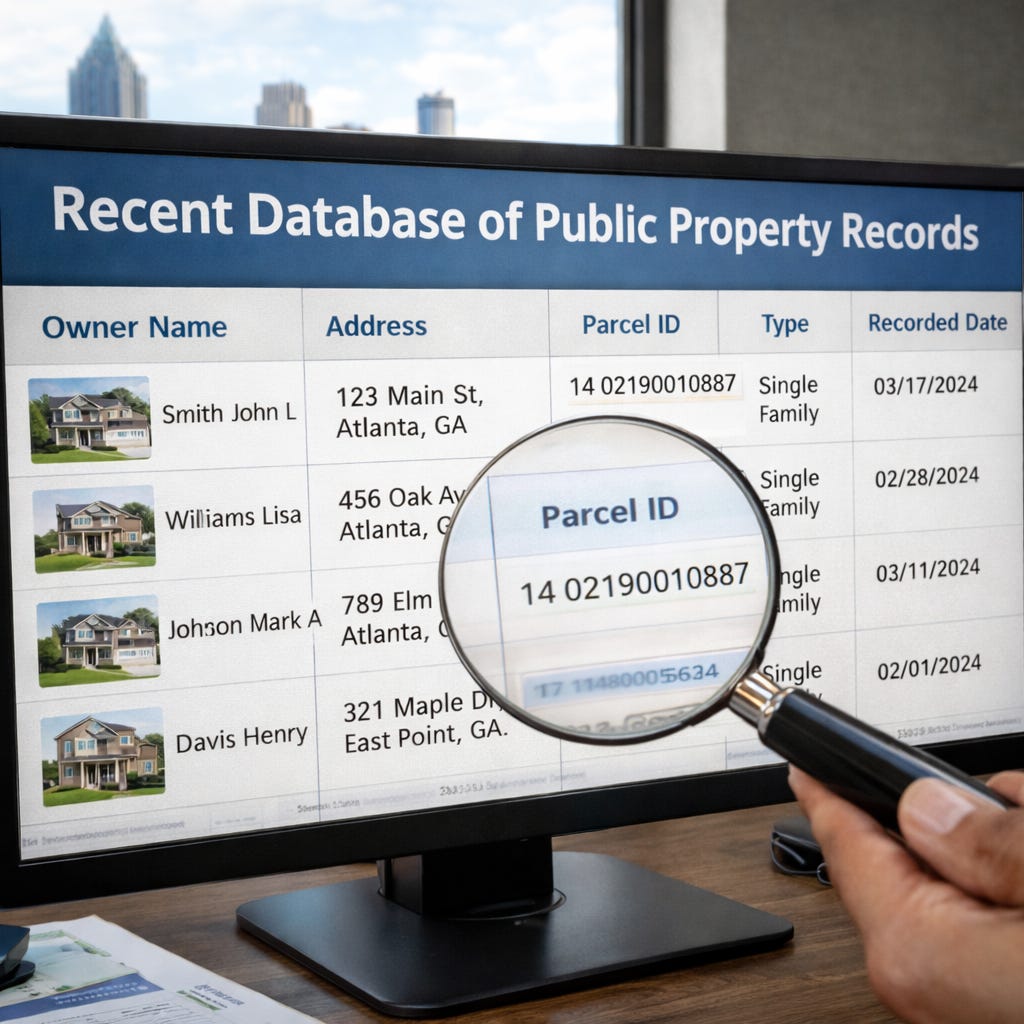
Understanding What Public Records Show (and Don’t Show)
When conducting your Fulton County property lookup, it’s important to understand the limitations of public records.
What IS Readily Available Online:
Recorded deeds showing ownership transfers
Mortgages/security deeds recorded at closing
Tax liens filed by government agencies
Judgment liens from court cases
Mechanic’s liens filed by contractors
Property tax payment history
Assessed values and property characteristics
Homestead exemption status
Parcel boundaries and zoning
What May NOT Show Up (or Shows Delayed):
Recent transactions: 30-90 day recording lag
Federal tax liens: Sometimes filed separately and not immediately indexed
Unreleased paid liens: Lender failed to file release document
HOA liens: Often not recorded until foreclosure proceedings begin
Code violations: May be in separate city/county code enforcement database
Bankruptcy: Federal court filings, not county records
Pending litigation: Unless lis pendens is filed
Environmental liens: May be in state EPA database
Other Records to Check:
Beyond the main Fulton County property lookup systems, consider these sources:
Building Permits and Code Violations:
City of Atlanta eForms portal for permits
Code enforcement databases for violations
Important for verifying legal improvements
Court Records:
Superior Court for lawsuit information
Magistrate Court for eviction records
Probate Court for estate matters
Environmental Records:
Georgia Environmental Protection Division
EPA databases for contamination sites
Bankruptcy Records:
U.S. Bankruptcy Court (Northern District of Georgia)
Can affect ability to transfer property
When to Hire a Title Company or Real Estate Attorney
While public records provide extensive information, professional title searches offer critical protections.
Why Professional Title Searches Matter:
Title companies and real estate attorneys:
Access additional proprietary databases
Search federal and state court records
Verify chain of title back 30+ years
Identify hidden liens and encumbrances
Provide title insurance protecting against defects
Ensure proper legal description
Verify authority of sellers to convey property
When to Order Professional Title Search:
Any property purchase: Standard practice for real estate transactions
Properties with known issues: Foreclosures, estate sales, tax liens
Complex ownership: Multiple owners, trusts, LLCs
Properties with gaps in records: Missing deeds, unclear chain of title
Investment properties: Protect your investment with insurance
Commercial properties: Higher stakes require professional verification
Cost of Title Services:
Title search: $150-$400
Title insurance: Varies by property value (typically $500-$2,000)
Attorney title examination: $300-$800
This is money well spent to avoid costly title problems after purchase.
What Title Insurance Covers:
Forged documents in chain of title
Unknown heirs claiming ownership
Errors in public records
Undisclosed liens and encumbrances
Mistakes in legal description
Fraud in previous transactions
Troubleshooting: Why Your Recent Sale or Deed Isn’t Showing Up Yet
One of the most common frustrations when conducting a Fulton County property lookup is finding outdated information. Here’s why and what to do.
Recording Delays in Fulton County:
Fulton County processes thousands of real estate transactions monthly. Delays are common:
Typical recording time: 30-60 days from closing to online availability
High-volume periods: Summer buying season can extend to 90 days
New construction: Newly created parcels may take 60-120 days
Condos and subdivisions: Initial plat recordings take even longer
Complex documents: Plats, easements may require additional review time
Why the Assessor Shows the Old Owner:
The Board of Assessors updates ownership from recorded deeds. The process:
Deed is recorded at Clerk’s office
Deed is indexed in county system
Assessor’s office receives notification
Assessor updates database
Each step adds time. Additionally, tax assessment records update annually, so new owners may not appear until after January 1 of the following year.
What to Do If Information Is Outdated:
Option 1: Contact Your Closing Attorney
Your real estate attorney or title company can provide:
Recorded book and page number
Copy of filed deed
Recording date confirmation
With book and page, you can find the deed directly in GSCCCA even if not yet indexed by name.
Option 2: Call the Clerk’s Office
Contact the Fulton County Clerk of Superior Court Real Estate Division at (404) 613-5314 to verify recording status.
Option 3: Search by Book and Page
If you have the book and page number from your closing, use the “Book and Page” search in GSCCCA to find your deed directly.
Option 4: Wait and Re-Check
If the transaction closed recently, allow 60-90 days before expecting full online updates across all systems.
Special Cases:
New Construction:
Developer must record subdivision plat
Individual lots must be created and assigned parcel IDs
Process can take 3-6 months
Contact Fulton County Planning Department for status
Condos in High-Rises:
Each unit requires individual legal description
Condominium declaration must be recorded
Master plat must show all units
Individual unit deeds follow
Downtown and Midtown towers particularly complex
Subdivisions:
Final plat must be approved and recorded
Lot numbers assigned
Individual lot sales follow plat recording
Check planning department for plat approval status
Subscribe
Complete Due Diligence Checklist: What to Verify Before Making an Offer
Use this comprehensive checklist before submitting an offer on any Fulton County property. Check off each item to ensure thorough research.
Property Records Verification (Board of Assessors):
Search property by address on Fulton County Board of Assessors
Verify current owner name matches seller
Check assessed value (multiply by 2.5 for estimated market value)
Review recent sales history on property card
Verify property characteristics (square footage, bedrooms, bathrooms, lot size)
Confirm year built and construction type
Check for any special assessments or district taxes
Record parcel ID for cross-referencing
Note any homestead exemptions (will be lost when you purchase)
Review tax digest history for assessment trends
Ownership and Title Research (GSCCCA):
Search current owner in GSCCCA as grantee
Pull and review current deed
Verify legal description matches property
Check chain of title for last 2-3 transfers
Search for all mortgages/security deeds against owner
Verify no unreleased mortgages from previous sales
Look for recent transfers that might indicate flipping
Check for quit claim deeds (may signal title issues)
Search for any lis pendens (pending lawsuits)
Review any easements or restrictions recorded
Lien and Encumbrance Search:
Search owner name for all liens (tax, judgment, mechanic’s)
Check recording dates of mortgages and verify cancellations
Search for federal tax liens (may be in separate index)
Search for state tax liens
Look for recent mechanic’s liens (contractors)
Check for judgment liens from court cases
Search for any “Notice of Lis Pendens”
If HOA property, contact HOA for lien verification
Document all open liens and amounts
Verify seller’s obligation to satisfy liens at closing
Tax Payment Verification:
Check current tax payment status on Tax Commissioner site
Review property tax payment history (last 3-5 years)
Verify no delinquent taxes from prior years
Calculate annual property tax based on your purchase price
Factor in loss of seller’s exemptions
Check for any special assessments or bonds
Verify tax year billing cycle
Note property tax due dates
Estimate your first full year tax liability
Confirm seller’s agreement to prorate taxes at closing
Physical Property and Zoning:
Review GIS map for parcel boundaries
Verify lot size and dimensions
Check for easements crossing property
Confirm zoning classification for intended use
Review flood zone status (FEMA maps)
Use aerial imagery to inspect property remotely
Verify access (public street vs. private easement)
Check for utility easements
Review any covenant restrictions
Confirm property lines match seller’s description
Building and Code Research:
Search for building permits (recent improvements)
Check for unpermitted additions or improvements
Search code enforcement for violations
Verify certificates of occupancy for multi-unit properties
Check for environmental liens or violations
Research any condemnation notices
Verify legal use matches current use
Check fire safety compliance for commercial properties
Additional Investor Due Diligence:
Compare assessed value to purchase price
Pull comparable sales in neighborhood
Research days on market and listing history
Check for recent price reductions
Verify seller is owner of record
Search owner for other properties (portfolio investor?)
Research neighborhood crime and schools
Check rental comps if investment property
Verify property can be insured
Confirm financing availability for property type
Review any HOA documents and financial statements
Calculate true ROI including all costs
Final Verification:
Order professional title search
Purchase title insurance
Have attorney review all documents
Verify seller has authority to sell
Confirm no bankruptcy affecting seller
Get survey to verify boundaries
Order home inspection
Review all disclosures from seller
Pro Tips for Atlanta Real Estate Investors
Maximize your Fulton County property lookup research with these advanced strategies used by successful Atlanta investors.
Tip 1: Build Targeted Owner Lists
Use owner name searches on the Board of Assessors site to identify investors with multiple properties. Export data and create direct mail campaigns targeting:
Absentee owners (property address ≠ mailing address)
Out-of-state owners
Owners with 5+ properties (portfolio fatigue)
Properties held 20+ years (estate planning candidates)
Tip 2: Monitor Tax Delinquencies
Search the Tax Commissioner site for properties with 2+ years delinquent taxes. These owners are often motivated sellers facing:
Financial hardship
Inherited properties they can’t afford
Looming tax foreclosure
Mounting penalties and interest
Tip 3: Track New Plat Recordings
Set up periodic searches in GSCCCA for new plats in target areas. Search document type “Plat” and filter by date range. Newly subdivided lots often present wholesale opportunities before retail marketing.
Tip 4: Identify Value Discrepancies
When assessed value significantly lags recent sale price:
Indicates possible distressed sale
Suggests flip or quick resale
May reveal family transfer or estate sale
Could signal deferred maintenance
Presents potential negotiation leverage
Tip 5: Use GIS for Land Assembly
Identify adjacent vacant parcels using GIS maps. Zoom into target areas and:
Look for multiple small lots under different ownership
Identify corner lot opportunities
Find land-locked parcels needing access easements
Spot irregular lots that might sell cheap
Research zoning for combined use potential
Tip 6: Track Absentee Owners
On the property card, compare property address to owner mailing address. If different, the owner is absentee and potentially more motivated to sell, especially:
Out-of-state addresses
PO boxes (could indicate business owner)
Different city in Georgia
Properties in trusts or LLCs
Tip 7: Research Wholesale Chains
If a property transferred multiple times in 6-12 months with no permits:
You’re likely seeing wholesale assignments
Original seller may still be motivated
Recent buyer may accept quick profit
Look for pattern of quit claim deeds
Contact early sellers in chain
Tip 8: Monitor Foreclosure Pipeline
Search GSCCCA for:
“Notice of Foreclosure” documents
“Lis Pendens” in foreclosure cases
Recent “Transfer of Security Deed” (loan sales)
Properties in foreclosure pipeline but not yet auctioned are prime negotiation targets.
Tip 9: Cross-Reference Multiple Data Points
Combine data from all systems for complete picture:
High assessed value + delinquent taxes = distressed owner
Recent deed + no permits + quick resale = wholesale flip
Long ownership + absentee + older home = estate candidate
Multiple liens + lis pendens = motivated seller
Tip 10: Set Up Systematic Monitoring
Create regular search schedule:
Weekly: New deeds in target areas
Monthly: Tax delinquency lists
Quarterly: Foreclosure notices
Annual: Reassessment changes
Consistent Fulton County property lookup activity reveals patterns and opportunities competitors miss.
Frequently Asked Questions
1. How do I check if property taxes are paid in Fulton County?
Visit the Fulton County Tax Commissioner website, search by parcel ID or address, and view current year payment status. Outstanding balances and delinquent years will be clearly indicated with amounts owed.
2. What if I find a lien on a property I want to buy?
Liens must typically be satisfied (paid off) at closing before clear title transfers. Your title company will identify all liens and ensure they’re paid from seller proceeds or require seller to clear them pre-closing. Never purchase property without clearing liens first.
3. How long do Fulton County property records go back online?
The Board of Assessors shows current year plus 5-10 years of tax history. GSCCCA has digitized deeds dating back to the 1970s-1980s for most Fulton County properties, with some earlier records available.
4. Can I download bulk property data from Fulton County?
Individual property searches are free, but bulk data downloads typically require special permission and may involve fees. Contact the Fulton County Board of Assessors directly at (404) 612-6440 for bulk data requests.
5. What does it mean if a property has a lis pendens?
A lis pendens is a recorded notice that a lawsuit has been filed affecting the property’s title. It warns potential buyers that ownership is being disputed. Never purchase a property with an active lis pendens without attorney review.
6. How do I search for properties going to foreclosure auction?
Monitor the Fulton County Sheriff’s website for foreclosure auction listings. Also search GSCCCA for “Notice of Foreclosure” documents to identify properties entering the foreclosure process before auction.
7. Are HOA fees and violations shown in property records?
HOA fees are typically NOT in public records unless an HOA lien is filed. Always contact the HOA directly to verify dues status, violations, and any pending assessments. Request HOA disclosure documents before purchasing.
8. What’s the difference between a warranty deed and quit claim deed?
A warranty deed provides guarantees about clear title and is standard in regular sales. A quit claim deed transfers only whatever interest the grantor has without any warranties—common in divorces, estate transfers, or between family members. Quit claim deeds can signal potential title issues.
9. How do I find out if a property is in a flood zone?
Use the Fulton County GIS map system and turn on the flood zone layer. You can also check FEMA’s Flood Map Service Center online for official determinations. Flood zone properties require special insurance.
10. Can I see mortgage amounts on recorded documents?
Some security deeds (mortgages) show the loan amount, but many list only nominal consideration like “$10 and other valuable consideration.” To estimate mortgage amounts, review sale history and compare to assessed values.
11. What if the seller’s name doesn’t match the deed?
This could indicate marriage/divorce name change, entity name variation (LLC), trust ownership, or title problems. Always require seller to prove legal authority to convey property through proper documentation.
12. How do I search for environmental liens or contamination?
Check the Georgia Environmental Protection Division website and EPA’s Envirofacts database. These are not in regular county property records. Commercial property buyers should order Phase 1 Environmental Site Assessments.
13. Can I tell if a property is owner-occupied from records?
Homestead exemptions indicate owner occupancy. If the property has a homestead exemption listed on the Board of Assessors property card, it’s likely owner-occupied. However, absence of exemption doesn’t prove non-occupancy.
14. What happens if I discover a title problem after searching?
This is why you always order professional title insurance. Title companies research extensively and insure against hidden defects. If problems arise after closing, your title insurance policy provides financial protection and legal defense.
15. How often should I update my property research?
For active deals, search weekly. Markets change, liens get filed, and foreclosures initiate. Always conduct fresh searches within 7 days of making an offer. Update your due diligence right before closing to catch any last-minute filings.
Your Next Steps: Master Fulton County Property Research
You now have a complete roadmap for conducting thorough Fulton County property lookup research. Whether you’re buying your first home in East Atlanta, investing in a Buckhead multi-family, or researching land opportunities, these tools and strategies will save you time and money.
Your Action Plan:
1. Bookmark Essential Resources:
2. Practice Your Skills:
Search 5 properties by address
Find property owners by name
Look up 3 deeds in GSCCCA
Navigate the GIS map system
Check tax payment status
3. Build Your Process:
Create a due diligence checklist
Set up a filing system for documents
Establish search routines
Document your findings systematically
4. Know Your Limits:
Recognize when to hire professionals
Order title searches for purchases
Consult real estate attorneys for complex issues
Work with licensed title companies
5. Stay Current:
Systems update and interfaces change
Fees and procedures may be revised
Always verify with official sources
Double-check critical information
Quick Reference: What to Use When
For basic property info: Use Board of Assessors
For ownership history: Use GSCCCA
For tax payment status: Use Tax Commissioner
For property boundaries: Use GIS Maps
For recorded documents: Use GSCCCA
For title insurance: Contact a licensed title company
For legal questions: Consult a real estate attorney
Share Your Success
Have you successfully used these Fulton County property lookup techniques? Discovered a great deal through public records research? Encountered challenges we didn’t cover?
Your experience helps others navigate the system. Consider sharing your insights with Atlanta’s real estate community.