
Understanding R1 Zoning Restrictions In 2026

Residential zoning continues to evolve across the United States, especially as more cities update their land-use policies to address housing shortages, urban growth, and long-term community planning. Among the most common classifications is R1 Zoning, a category that determines how land can be used and what types of structures can be built. As we move into 2026, understanding R1 Zoning Restrictions is essential for homeowners, investors, and land buyers who want to make informed decisions.
This guide breaks down everything you need to know—from what R1 zoning means, how it compares to R2, what you can legally build, and how to locate R1-zoned lots in your target area.
Understanding R1 Zoning Restrictions
R1 zoning—often referred to as “single-family residential zoning”—is one of the most widely used zoning categories in American municipalities. It establishes specific rules for lot size, building type, setbacks, height limits, and allowable uses.
In 2026, cities continue refining these rules to ensure communities maintain a balance between density, property value stability, and growth. While details vary by county or city, R1 Zoning Restrictions generally focus on preserving low-density, residential neighborhoods intended for single families.
These restrictions typically limit the number of structures, regulate minimum square footage, control building heights, and define how close a home can be built to the property line. Because these standards aim to maintain the character of suburban areas, investors and homeowners need to understand them before developing land or buying property.
What Is R1 Zoning?
R1 zoning is a land-use category that designates a property for single-family residential use only. These neighborhoods are designed to remain low-density and quiet, offering residents more space and privacy compared to multi-family districts.
Common features of R1 zoning include:
Large lot size minimums
A single primary dwelling per parcel
Restrictions on accessory dwelling units (ADUs) depending on the municipality
Height and setback requirements
Limitations on commercial activity
Some cities allow ADUs, guest houses, or detached garages under R1 zoning, while others restrict additional structures to prevent over-building. Because zoning laws differ, always check your local planning department for exact specifications.
As the push for more affordable housing grows, some municipalities are revisiting R1 zoning to allow gentle increases in density. However, the core principle remains: R1 zoning is primarily for one household per lot.
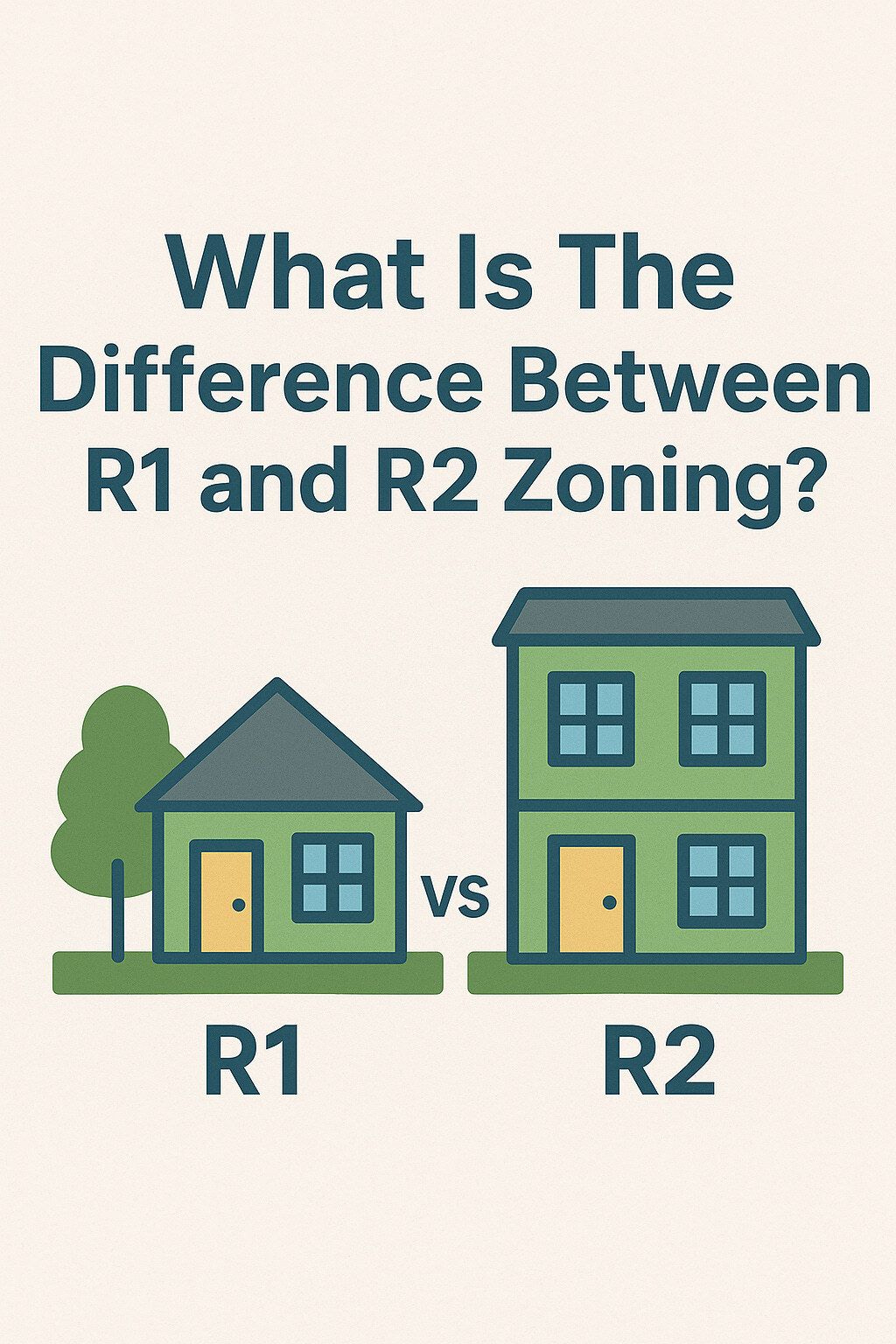
What Is The Difference Between R1 & R2 Zoning?
The difference between R1 and R2 zoning can significantly impact property value, investment potential, and building options.
R1 Zoning
Single-family homes only
Lower density
Larger minimum lots
Limited multi-structure options
Often stricter height and setback rules
R2 Zoning
Allows duplexes and sometimes small multi-unit buildings
Higher density permitted
Smaller lot size requirements
More flexibility for investors
In short, R2 offers more building opportunities, while R1 prioritizes single-family neighborhoods. If your goal is to generate higher rental income or increase density, R2 zoning is typically more favorable. However, R1 zoning is often preferred by homeowners seeking quieter, more private communities.
What Can You Build On R1 Zoning?
What you can build depends on your city, but most 2026 R1 zoning ordinances allow:
1. A Single-Family Residence
This is the primary permitted use. The home must meet the minimum square footage required by the municipality, often ranging from 800 to 2,000 square feet.
2. Accessory Structures
Examples include:
Garages
Storage buildings
Workshops
Carports
These must follow setback rules and height limits.
3. Accessory Dwelling Units (ADUs)
In some cities, ADUs—like backyard cottages or basement apartments—are allowed under R1. However, approval often depends on lot size, sewer capacity, and neighborhood rules. Some areas require owner-occupancy, while others permit renting out the ADU.
4. Home-Based Businesses (Limited)
You may be able to run a home office or online business from an R1-zoned property. However, activities that increase traffic, noise, or foot traffic are usually restricted.
5. Recreational or Agricultural Use (Low Impact)
Some rural R1 zones allow gardens, small animals, or limited agricultural activity as long as it does not disrupt neighbors.
Before building anything, it’s crucial to check your city’s zoning ordinance and permitting department. Violating R1 Zoning Restrictions can lead to fines or forced removal of unapproved structures.
How To Find R1 Zoning Lots
Finding R1-zoned land in 2026 is easier than ever, thanks to digitized county zoning maps and advanced property search tools. Here are the best methods:
1. Use Your County’s GIS Mapping System
Most counties have an online Geographic Information System (GIS) where you can:
Search parcels
View zoning maps
Check property boundaries
Identify zoning categories (R1, R2, C1, etc.)
This is often the most accurate and up-to-date source.
2. Search Real Estate Platforms
Websites like Zillow, Redfin, LandWatch, and Realtor.com sometimes list zoning information in the property details. You can filter for vacant land and cross-check zoning with your county’s maps.
3. Contact Planning & Zoning Departments
If zoning information is unclear, call the local planning office. They can confirm zoning categories, provide zoning code PDFs, and explain any upcoming changes for 2026.
4. Work With Local Land Agents
Real estate agents specializing in land frequently know the zoning rules for their area and can help you locate R1 lots faster.
5. Check City Zoning Ordinances
Most cities publish zoning regulations online. Searching the code will give you insight into:
Allowed uses
Setback rules
Minimum lot sizes
Occupancy limits
ADU regulations
Knowing these rules helps you decide whether a parcel is buildable and worth the investment.
Final Thoughts on R1 Zoning Restrictions
Understanding R1 Zoning Restrictions in 2026 is essential for making the right decisions when buying, selling, or developing land. Whether you’re a homeowner planning a build or an investor evaluating land opportunities, knowing what’s allowed—and what isn’t—can save time, money, and potential legal issues.
R1 zoning continues to shape residential communities across America, preserving single-family neighborhoods while evolving slowly in response to housing demands. With the right information, you can confidently evaluate any R1-zoned lot and maximize its potential.